In marketing, a lead is a potential customer who has somehow shown interest in your product or service, meaning they have provided their contact information or a request. The person who asks "Can I get a price quote?" on Instagram, the visitor who fills out a form on your website, the neighboring shopkeeper who calls to schedule an appointment: they are all leads. The real challenge isn't finding leads, but responding to them promptly. A significant portion of incoming messages go unanswered in the evening, on weekends, or during peak hours, and the lead silently goes to a competitor. This guide defines the term, explains lead types and collection methods step-by-step, and then demonstrates how to generate leads through conversation.
What does "lead" mean? The concept of lead in marketing.
In marketing and sales, a " lead " refers to a potential customer. For someone to be considered a lead, they need to make concrete contact with your brand and provide contact information (phone number, email address, social media account) or a clear request.
In English, the word "lead" generally means "to lead, to show the way," and "a hint." In the sales world, it began to be used as "sales lead," meaning "sales hint," and has now been adopted in Turkish marketing terminology. So, the short answer to the question "what is a lead?" is: a hint that has the potential to convert into a sale.
Note: "Lead" doesn't mean the same thing in every context. In general English, it means "to lead" or "lead" (metal), in music it means "main vocal," and in medicine it refers to a "lead" in an ECG. This guide explains its meaning in marketing and sales as "potential customer."
The difference between a lead and a regular visitor is contact and permission :
- A person who enters and leaves your site without leaving any trace is a visitor.
- A person who asks for a price quote, requests a catalog, or schedules an appointment is a lead.
- The person who buys is the customer.
For SMEs, the everyday equivalent of this is: every person who asks for a price via DM is a lead. Everyone who texts your hairdresser asking "Do you have an appointment on Saturday?", asks your car dealership "What's the trade-in situation for this model?", or asks your workshop "Can I get a quote for a product?". Often, these leads don't end up in a CRM; they stay in the inbox, responses are delayed, and they get lost.
Lead types: cold, hot, MQL, and SQL.
Not all leads are created equal. To know when and how to approach each one, look at these four core classes:
Type | Who? | Example | Correct move
Cold lead | Someone you don't know yet or whose interest is unclear | Purchased listing, business cards collected at an event | A short introductory message that offers value
Warm lead | Someone who shows interest themselves, who knows you | Someone who asks about products via DM, opens the price page and fills out the form | Quick and personalized response.
MQL (Marketing Qualified Lead) | A lead deemed qualified from a marketing perspective | Someone who downloaded your ebook and read a few of your articles | Engage with content, monitor engagement score
SQL (Sales Qualified Lead) | A lead that the sales team finds ready to meet | Someone who specifies their budget, timeline, and needs | Proposal, demo, or appointment.
The sequence generally progresses from cold to SQL, but it doesn't have to be linear. In messaging channels, someone often starts directly with warm, even close to SQL. Someone asking, "What's the price, can you deliver this week?" has skipped a few steps in the marketing funnel; they need an immediate response instead of a series of emails.
What is lead generation and how does it work?
Lead generation is the process of attracting interested individuals, collecting their contact information, and preparing them for a sale. In Turkish, it's also known as lead gathering and finding potential customers. The process can be summarized in five steps:
- Grab attention. Ensure the right people find you through content, advertising, social media, search results, or local visibility.
- Provide a point of contact. Open up an easy communication channel such as a form, DM, chat window, phone, or WhatsApp.
- Gather the information. Collect the name, contact information, and request, making sure to include the necessary details.
- Evaluate the situation. Is the person a serious buyer, do they have the budget and timing, and what product are they interested in?
- Follow up. Get back to the right person at the right time; move on to a sale or appointment.
Most businesses invest in steps 1 and 2, but lose out on step 5. Advertising budget is spent, messages are sent, but no one responds in time. Therefore, evaluate the followi

ng methods not only with the question of "how many leads did I generate?" but also with "how many leads did I respond to immediately?".
8 lead generation methods for SMEs
Here are eight methods you can implement even if you don't have a large marketing team:
- The website uses a short form. Name, phone number, and a single-line request are sufficient. The more fields, the less likely someone is to fill out the form.
- Chat window (web chatbot). Visitors who don't want to fill out a form can ask questions; the bot gathers information within the conversation as it responds. For details, see the chatbot guide for your website .
- Instagram and Facebook DMs, as well as messages from posts, stories, and ads, are the hottest source of leads. Setting up Instagram auto-messages is the starting point for automating the first response.
- WhatsApp Business. Manage your profile, catalog, and respond to incoming requests efficiently with quick replies.
- Exchange valuable content for information. Provide a useful document such as a pricing guide, checklist, or sample quote, and request an email in return.
- Google Business Profile. Be visible in local search; search, directions, and message requests are direct leads.
- Blog and SEO. Content that answers questions like "What does 'lead' mean?" brings interested people to your site. The goal here isn't traffic itself, but to guide that traffic to the next step (form, chat).
- Referrals and customer recommendations. A simple "bring a friend" offer from a satisfied customer is the most cost-effective channel for most SMEs.
Don't launch them all at once. Choose the two channels your customers are already writing to (DM and website for most businesses), and reset any missed messages there first.
If you're wondering why visitors leave your site without chatting, my article "Why Customers Leave Without Buying" addresses these issues.
Generating leads from conversation: Instagram, Messenger, and website.
Generating leads from conversation means understanding a visitor's needs while talking to them, instead of having them fill out a form, and gathering their name, phone number, and request information in a natural flow of conversation. The customer asks their question, the chatbot answers, and at an appropriate point asks, "Can I have your phone number so we can get back to you?"
This approach works for two reasons:
- Friction is reduced. Someone asking a question is more inclined to provide a small piece of information when receiving an answer; they are generally less inclined to fill out a long form.
- Timing is never lost. Whether the message arrives at 2 AM or on a busy Saturday afternoon, the bot will respond immediately.
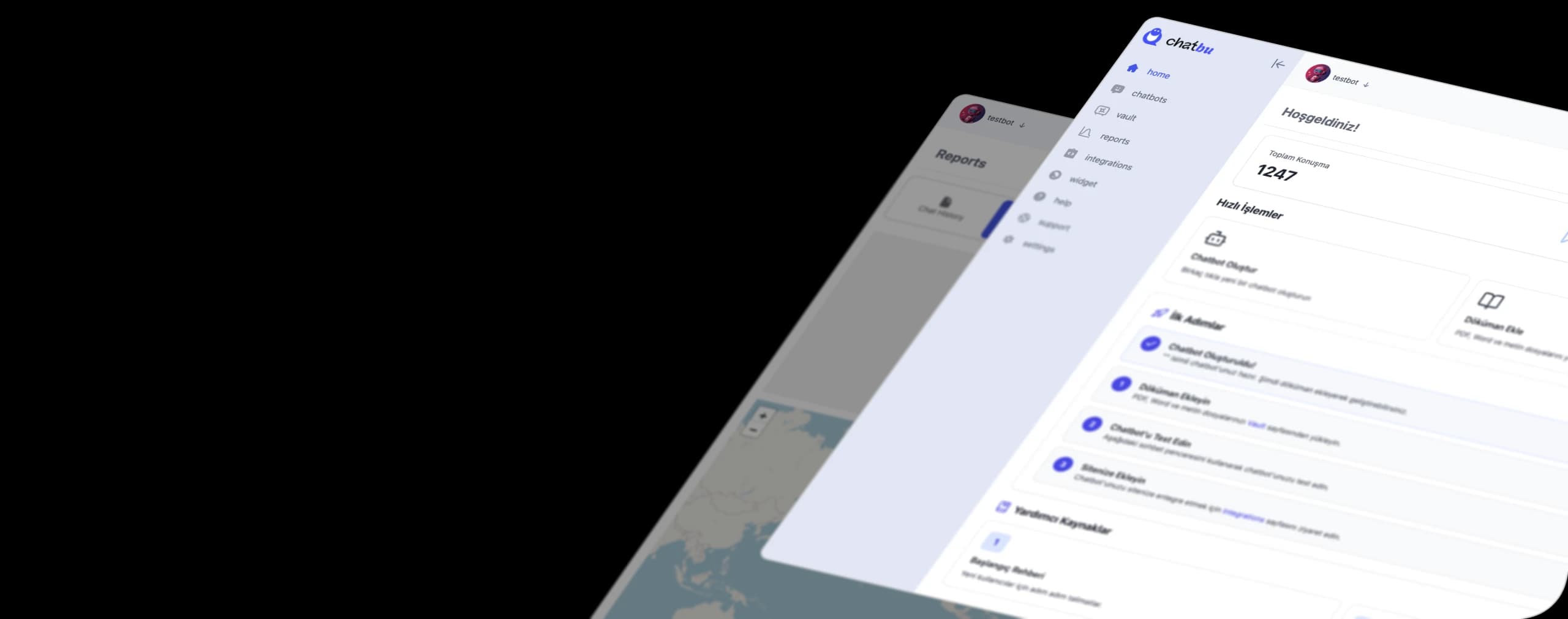
Chatbu allows you to set up a custom chatbot trained with your business documentation, website, and FAQs. The Lead Captured indicator you see on the homepage perfectly illustrates this feature: the bot extracts the person's name, phone number, and request from the conversation as it answers questions, so you have "who asked for what" information ready in the conversation list at the end of the day. With Meta integration, you can reach visitors via Facebook and Instagram Messenger, and through a chat window embedded on your website. For details, see the lead capture features page.
A practical example scenario: A beauty salon receives a message on Instagram asking for "laser hair removal price?". The bot responds with a price range from the FAQ, then asks, "Which area were you interested in, and what is your name and phone number so we can share available times with you?" When the salon team arrives in the morning, they see a hot lead list with names, numbers, and requests.
The bot's job isn't to close the sale, but to transfer the lead to your team without losing it . For complex, sensitive, or negotiation-requiring matters, it's always better to delegate the conversation to a human.

Converting leads into customers: speed and follow-up.
Lead generation is half the battle; the other half is how quickly you respond to them. The most cited study on this topic is "The Short Life of Online Sales Leads" by James Oldroyd, Kristina McElheran, and David Elkington, published in the Harvard Business Review . According to the study's most cited finding, companies that contact a customer within the first hour of an inquiry are approximately seven times more likely to qualify the lead than those that arrive an hour late.
It's important to note that this study covers online sales leads from companies in the US and cannot be directly applied to a DM or WhatsApp message in Turkey. But the point is clear: a pending lead will cool down. The following habits work in any industry:
- Automate the initial response. Send the initial response instantly, and let the human team delve into the details.
- Convert the conversation into a lead recording. Instead of just remembering "someone wrote this," keep a record that includes name, phone number, request, and date.
- Prioritize them. Call the person asking about price and delivery date first; leave those asking for general information for later.
- Set a follow-up date. Send another short reminder message to the lead that didn't respond.
- Read the conversations. Which questions signal a potential buyer, and which objections are recurring? Reflect these in your FAQs and proposals.
To see the benefits of providing 24/7 response times for your business, you can read our article on 24/7 customer support .
Personal Data Protection Law (KVKK): Things to consider when collecting contact information.
Name and phone number are personal data; every business collecting leads in Türkiye must comply with the Law No. 6698 on the Protection of Personal Data (KVKK). Two concepts are often confused here:
- Obligation to inform: You must inform the individual when collecting data. This obligation must be fulfilled in all cases, regardless of the circumstances of personal data processing. According to the KVKK's public announcement regarding the obligation to inform , the information must at a minimum include the identity of the data controller, the purpose of processing, to whom the data may be transferred, the method of collection and the legal basis, and the rights of the individual concerned.
- Explicit consent: Approval given freely and based on information regarding a specific matter. The Personal Data Protection Law's (KVKK) explicit consent guide lists these three elements and emphasizes that consent must include a "positive declaration of intent."
When gathering information with a chatbot, pay attention to the following points:
- State the purpose of your request before asking for information. Begin with a short sentence such as, "We are taking your name and phone number so we can get back to you with an offer," and link to the privacy policy.
- Do not confuse informed consent with explicit consent. The Personal Data Protection Law (KVKK) announcement lists the presentation of both in the same text and the refusal to provide the service without consent as violations.
- Do not redirect to the general privacy policy. The privacy statement should be limited to and understandable in relation to this data processing activity; it should be easily accessible.
- Only ask for what's necessary. If a name and phone number are sufficient for an offer, don't ask for a date of birth.
- Obtain permission separately for marketing messages. If you want to send a campaign or commercial electronic message, this is a separate permission matter from answering the lead's question.
This section provides general information. It's advisable to review the relevant privacy policy with a legal advisor, tailored to your specific business sector.
Start collecting leads from messages.
A lead is an opportunity contained within every incoming message; it's often lost not because of indifference, but because of a delayed response. First, choose the channel where you receive the most messages, list the frequently asked questions, and automate the initial response.
Start generating leads from messages: Chatbu is free for 14 days . No credit card required; train your chatbot with your documentation and website and launch it in minutes.
Frequently Asked Questions
Are a lead and a potential customer the same thing?
In practice, yes. In marketing, "lead" refers to a potential customer. There's a subtle distinction: a potential customer can describe a general audience, while a lead is someone who has had concrete contact with you, has contact information, or a request.
What is the difference between MQL and SQL?
An MQL (Marketing Qualified Lead) is a lead that the marketing team finds relevant but is not yet ready for a sale. A SQL (Sales Qualified Lead), on the other hand, is a lead whose needs, budget, and timing are clear, and who is ready for a meeting with the sales team.
Are lead generation and lead nurturing the same thing?
No. Lead generation is the process of gathering the contact information of interested individuals. Lead nurturing, on the other hand, is the process of preparing these individuals to make a purchase through content and regular communication.
Can leads be collected using a chatbot?
Yes. When answering a visitor's question, the chatbot may request information such as name, phone number, and request within the conversation. Before collecting this information, it is necessary to state the purpose and provide a link to the GDPR (Personal Data Protection Law) disclosure text.
Do I always need to obtain explicit consent when collecting leads?
The obligation to inform applies in all cases. Explicit consent is only required when the processing of personal data is not based on other legal requirements in the KVKK (Personal Data Protection Law). Sending commercial communications for marketing purposes also requires permission. Consult a legal advisor for a definitive assessment.